The garage door spring carries the full weight of the door through every open and close cycle, and when it breaks, the door stops working in ways that are hard to ignore. Learning how to tell if a garage door spring is broken helps homeowners act fast before the problem spreads to the rest of the system.
A broken garage door spring repair left unattended puts the entire door system under stress that compounds with every use, and the damage rarely stops at the spring. This article covers the most common signs, causes, and immediate steps every homeowner needs to know to handle a garage door spring break the right way.
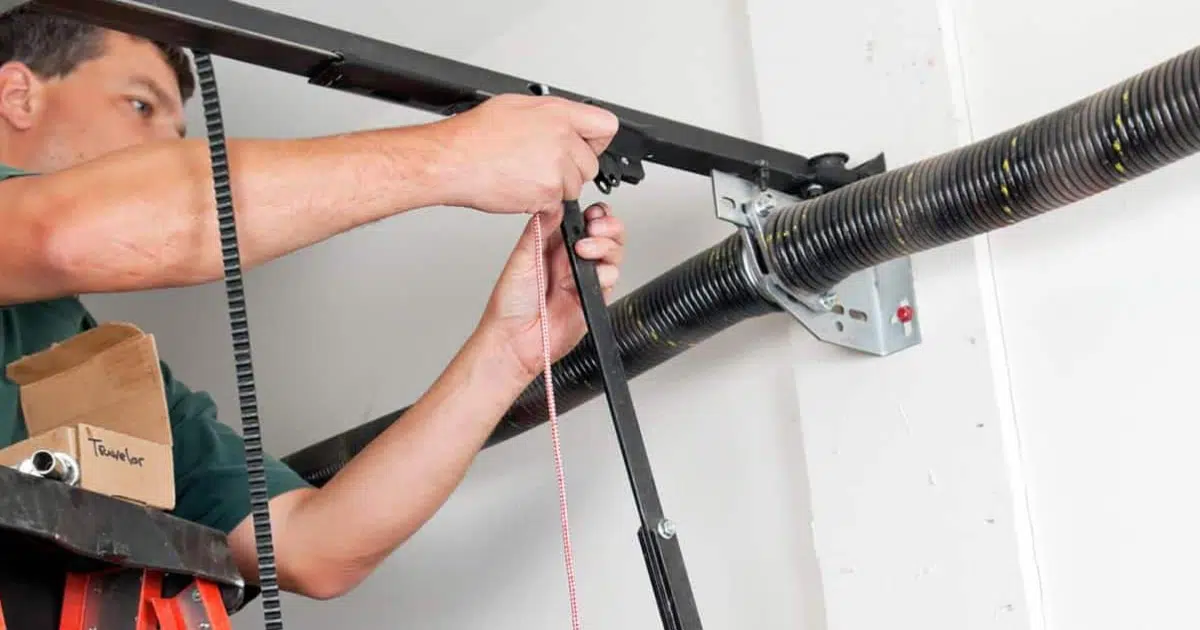
What Causes a Garage Door Spring to Break?
Garage door springs fail for specific, identifiable reasons, and recognizing those reasons early gives homeowners a real chance to catch the warning signs before the spring reaches its breaking point and takes other components down with it.
Common causes of a broken garage door spring include:
- The spring reaches its rated number of cycles, and the metal starts to weaken
- Rust and corrosion eat into the coils and create friction that speeds up failure
- A spring sized incorrectly for the door’s weight wears out ahead of schedule
- Cold temperatures make the metal brittle, especially in springs that are already worn
- Poor lubrication adds stress to the coils on every open and close cycle
To learn what these failure patterns look like up close, read our guide on Common Causes of a Broken Garage Door Spring, which covers the wear patterns, environmental factors, and maintenance gaps that lead to spring failure.
Signs of a Broken Garage Door Spring
A Visible Gap or Snap in the Coil
Torsion and extension springs should look like a single continuous, tightly wound piece of metal, and any visible break along the coil confirms the spring has failed.
Watch for these indicators:
- Coils that were once tightly wound now show an obvious separation or gap
- The torsion spring above the door looks uneven or split near the center
- The extension spring along the track appears stretched out or partially detached
- One end of the spring hangs lower than the other when viewed straight on
- Metal edges at the break point look sharp, jagged, or freshly snapped
A visible gap in the coil means the spring has snapped, and a new garage door spring installation is the only repair that restores the door to full function.
A Loud Bang Coming From the Garage
Most homeowners hear the spring go before they ever see it, and that sudden loud bang is the spring releasing years of stored tension in a single instant.
Listen for these patterns:
- A sharp, explosive crack comes from inside the garage with no visible cause
- Sound resembles a gunshot or a heavy object striking the concrete floor
- Bang happens without warning, even when the door has not been used recently
- The opener stops responding or behaves differently immediately after the sound
- Noise occurs once and does not repeat, unlike rattling or grinding that comes and goes
That single loud bang almost always means a garage door spring breaks under load, and emergency garage door repair is the right call.
The Opener Strains but the Door Will Not Lift
Without spring support, the garage door opener takes on a load it was never built to carry, and the strain it shows points directly to a spring that is no longer functioning.
Notice these behaviors:
- Motor runs loudly, but the door barely moves or lifts only a few inches off the ground
- Opener hums or buzzes for several seconds before shutting off on its own
- Drive system activates, but the door does not follow at the normal pace
- Safety reverse triggers and the door stops before reaching the open position
- Repeated attempts produce the same result with no improvement between tries
Every time the opener runs without spring support, the strain on the motor builds up, leading to a garage door repair that covers more than just the spring.
The Door Slams Down Instead of Closing Gently
Spring tension controls how a garage door lowers, and losing that tension means the door drops at whatever speed gravity allows rather than the steady pace the system was built for.
Look for these signs during closing:
- The door picks up speed midway through closing instead of maintaining a steady pace
- Bottom seal hits the ground with a hard impact rather than a soft, even contact
- Closing sounds louder and more abrupt than it did in previous weeks
- The door bounces slightly off the floor on impact instead of settling into place
- Hardware near the bottom of the door visibly shakes or shifts on contact
An abrupt, uncontrolled close is a strong physical sign that the counterbalance the spring provides is gone and the door is operating on gravity alone.
Loose or Dangling Cables on the Sides
Cables and springs work as a single unit, and when the spring loses tension, the cables immediately show the effect in their position and condition.
Check for these cable behaviors:
- Lifting cables on one or both sides of the door hang slack instead of running taut
- The cable has slipped off the drum at the top corner of the door frame
- Bottom of the cable pools near the floor instead of running straight up the track
- One side of the door sits lower than the other due to uneven cable tension
- Fraying or kinking appears near the bottom bracket, where the cable attaches
Slack or detached cables almost always trace back to a spring that has already lost its tension or snapped entirely.
What to Do After Noticing a Broken Garage Door Spring
The steps taken right after noticing a broken garage door spring determine how much additional damage the rest of the system takes before a technician arrives.
Here is what to do right away:
- Stop using the opener immediately and do not attempt another cycle
- Pull the emergency release cord to disconnect the door from the opener
- Perform a quick visual check on the cables, drums, and bottom brackets for damage
- Take a photo of the broken spring to help the technician arrive with the correct parts
- Call a professional garage door spring repair technician to assess the full system
To explore whether a repair is something a homeowner can handle alone, read our guide on Can You Fix a Broken Garage Door Spring Yourself?, which covers the tools, risks, and situations where professional help is the only practical option.
Can a Garage Door Still Be Used With a Broken Spring?
Operating a garage door with a broken spring puts the opener, cables, and everyone near the door at immediate risk with every attempt.
Here is what happens when a garage door is used with a broken spring:
- The opener motor strains against the full weight of the door and can burn out in a single attempt
- Cables lose tension and can snap or slip off the drums entirely
- The door can drop suddenly without warning at any point during operation
- Tracks and rollers take on uneven load and begin to bend or bind
- Each forced cycle adds more wear to components that are already under stress
Using a garage door with a broken spring is never worth the risk it creates for the people and equipment around it.
How to Manually Open a Garage Door With a Broken Spring
Manually opening a garage door with a broken spring requires careful handling, as the door carries its full weight with no counterbalance to support it.
Follow these steps to manually open the door:
- Pull the red emergency release cord to disconnect the opener from the door
- Grip the door firmly at the bottom center using both hands, and lift with both legs
- Move the door slowly and stop immediately if it feels like it will drop
- Secure the door in the open position using locking pliers or clamps on the track
- Never walk under the door until it is fully secured and cannot slide down
To get a full breakdown of moving a door safely without spring support, read our guide on Can You Manually Open a Door With a Broken Garage Door Spring?, which covers each step for handling the door without causing injury or additional damage.
When to Call a Garage Door Spring Repair Professional
Garage door spring repair demands specialized tools and hands-on training that most homeowners simply do not have access to.
Call a professional when:
- A visible gap, snap, or separation appears anywhere along the spring coil
- The opener strains, hums, or fails to lift the door past a few inches
- Cables are hanging loose, fraying, or have slipped off the drums
- The door drops without control or slams shut instead of closing gently
- Any attempt to manually lift the door feels like dead weight
Handling a high-tension spring without proper training and tools puts everyone in the garage at serious risk of injury.
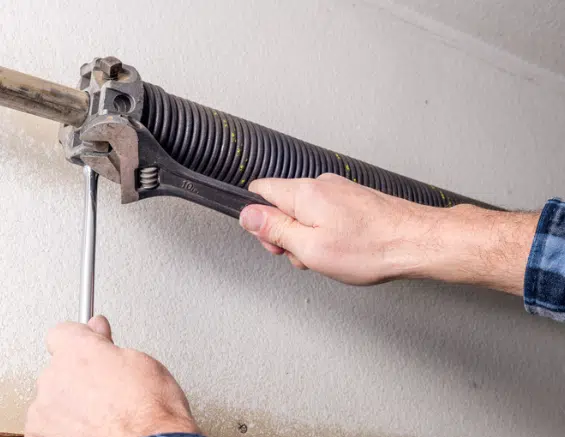
Know the Signs of a Broken Garage Door Spring Before It Stops You Cold
A broken garage door spring sends clear signals through sound, movement, and visible damage that point directly to the problem before the door stops working entirely. Recognizing those signals early and acting on them immediately is what keeps a single failed spring from pulling the rest of the system down with it.
Sawtooth Garage Doors brings the tools, training, and years of experience needed to diagnose and repair broken garage door springs the right way for homeowners across Boise, ID. Contact us or give us a call today, and let our team assess the full condition of your springs and hardware before the problem gets any worse.