A broken garage door spring prevents the door from functioning as it should, and the immediate concern for most people is whether manual operation is still possible. That question is worth answering carefully because moving a door without working spring support carries risks that are easy to underestimate.
Broken garage door spring repair is the permanent solution, but understanding what happens when a spring fails helps explain why manual opening must be treated as a last resort. The weight of the door and the condition of the cables determine whether attempting to open it manually is worth the risk.
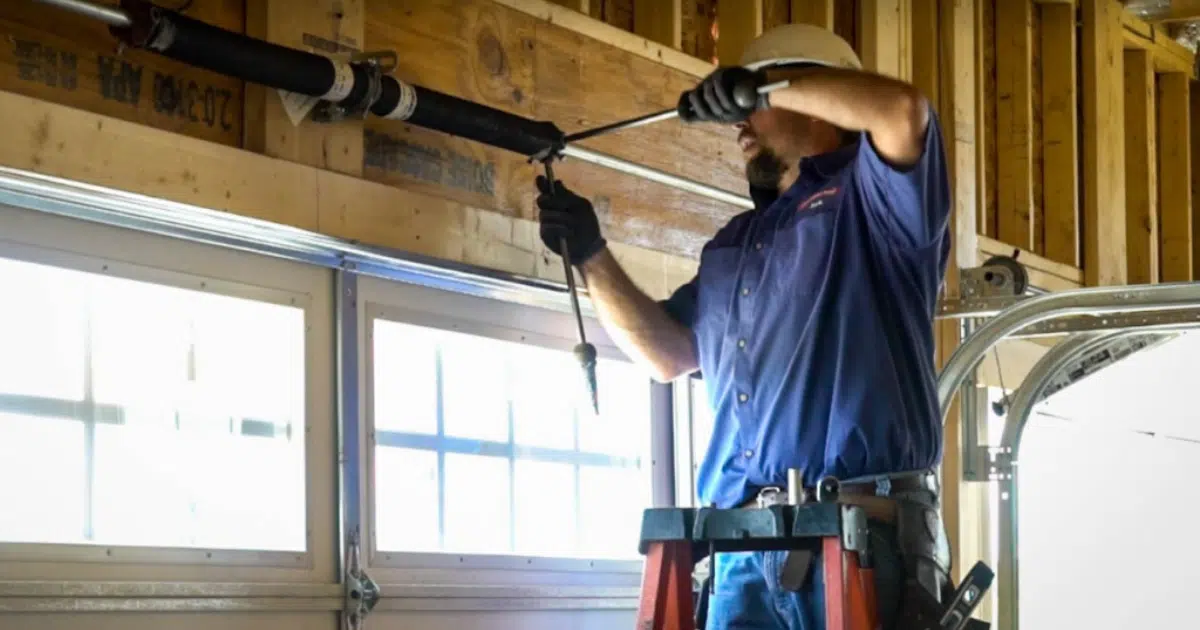
What Happens to a Garage Door When a Spring Breaks?
A garage door spring carries the mechanical load that keeps the entire system functioning, and the moment it breaks, the balance that keeps the door operating normally disappears.
Common changes that happen the moment a spring breaks include:
- The door’s weight shifts entirely onto the cables with no counterbalance
- Coils that store lifting energy go slack or separate completely
- The opener strains against the full dead weight of the door
- Rollers and hinges take on uneven pressure that accelerates wear
- The door may open only a few inches before the opener stops
To understand why these changes demand immediate attention, read our guide on How to Tell If a Garage Door Spring Is Broken, which covers the warning signs that confirm a spring has failed and what the door’s behavior reveals about the system.
Common Causes of a Broken Garage Door Spring
Garage door springs fail for specific, identifiable reasons, and recognizing them early gives homeowners a real chance to act before a full break occurs.
Common causes of a broken garage door spring include:
- Springs reach their rated number of cycles, and the metal begins to weaken
- Rust and corrosion eat into the coils and create friction that speeds up failure
- A spring sized incorrectly for the door’s weight wears out ahead of schedule
- Cold temperatures make the metal brittle, especially in springs that are already worn
- Poor lubrication adds stress to the coils on every open and close cycle
To learn what these failure patterns look like up close, read our guide on Common Causes of a Broken Garage Door Spring, which covers the wear patterns, environmental factors, and maintenance gaps that lead to spring failure.
Is It Safe to Open a Garage Door With a Broken Spring?
Opening a garage door with a broken spring puts the door, the opener, and anyone nearby at serious risk of injury and damage.
Reasons why opening a garage door with a broken spring is not advised:
- A door without spring support has no counterbalance and can drop without warning
- Lifting the full dead weight of the door puts extreme strain on the back and shoulders
- The opener motor will burn out quickly when forced to carry the door’s full load
- Cables and tracks absorb uneven stress that can cause them to snap or bend
- A second spring in a dual-spring setup can snap during the attempt and cause the door to crash
Understanding these risks is the reason why every step that follows must be approached with full awareness of what can go wrong.
Can You Manually Open a Garage Door With a Broken Spring?
Yes, manually opening a garage door with a broken spring is possible, but it should only be attempted when there is absolutely no other option available.
Follow these steps only if absolutely necessary:
Step 1: Pull the Emergency Release Cord
Disconnecting the opener from the door is the first and most critical move before anything else is attempted.
Watch for these important points before pulling the cord:
- Red emergency release cord hangs from the opener track and disengages the drive system
- Pull the cord straight down only when the door is fully closed
- Pulling while the door is mid-travel can cause it to drop or shift unexpectedly
- Once released, the motor will not engage until the carriage is manually re-engaged
- Opener damage is avoided entirely when this step comes first
Pulling the cord correctly is what separates a controlled manual operation from a dangerous one.
Step 2: Clear the Area
Clearing the area completely before lifting removes anything that could turn a controlled lift into a dangerous situation.
Key actions to take before attempting the lift:
- Move all vehicles and belongings away from the door zone on both sides
- Children and pets must be kept well away from the garage during the entire process
- Confirm the floor surface is dry and free of anything that could cause slipping
- Both people involved must have a clear path to step back quickly if needed
- Nothing should be blocking the tracks on either side of the door
A door that loses control mid-lift will damage anything left in its path and turn a broken spring into an emergency garage door repair call.
Step 3: Lift With Another Person
Attempting to lift a garage door without spring support alone puts the person at serious risk of injury.
Steps to follow when preparing for a two-person lift:
- Enlist at least one other capable adult before any lift is attempted
- Position both people evenly on either side of the door for balanced control
- Communicate clearly before lifting, so both move at exactly the same time
- Wearing gloves improves grip and protects hands from sharp metal edges
- Anyone with a back, shoulder, or joint condition must not participate in the lift
Distributing the door’s weight between two people is the only way to maintain control during manual operation.
Step 4: Lift From the Center
Grip placement during a manual lift determines whether the door panels remain intact, and the wrong position can cause permanent structural damage.
Points to keep in mind when gripping and lifting the door:
- Grip the bottom panel handle or the bottom edge firmly before pushing up
- Push straight up in one smooth, controlled motion without jerking
- Upper panels and side edges are not built to handle direct lifting pressure
- Keep the movement steady and stop immediately if the door binds on the tracks
- Panels can crack or bend permanently if force is applied to the wrong area
Lifting from the bottom center is what keeps the door structurally intact when spring tension is no longer doing the work.
Step 5: Secure and Block the Door
A door without a working spring has no way to hold itself open and will fall shut the moment it is released.
What to put in place before walking under or through the door:
- Place heavy-duty clamps directly under the bottom rollers on both sides of the track
- Add solid wooden blocks or a sturdy ladder under both ends of the door
- Never rely on a single support point to hold the full weight of the door
- Walk under the door only after both sides are fully secured and tested
- Leave everything in place until a professional technician arrives to handle the broken spring
Keeping the door fully secured on both sides is what prevents an uncontrolled drop while waiting for professional garage door repair.
Garage Door Spring Repair and Replacement Options
Repair and replacement options vary based on the spring type, the hardware’s condition, and the extent of the damage.
Option | Best For | Key Consideration |
Spring Repair | Minor tension adjustments only | Not possible on a fully snapped spring |
Single Spring Replacement | One broken spring on a single-spring setup | Matching the existing spring specs matters |
Dual Spring Replacement | Both springs were replaced at the same time | Keeps the system balanced and extends lifespan |
Torsion Spring Replacement | Heavy doors with a horizontal spring mount | Requires specialized tools and training |
Extension Spring Replacement | Lighter doors with side-mounted springs | Both sides must match for even operation |
Each option carries its own set of requirements, and matching the wrong solution to the door creates more problems than it solves.
Why Professionals Should Handle a Broken Garage Door Spring
Garage door springs operate under extreme tension, and a single miscalculation during handling can cause serious injury.
Why professional handling is the only practical option:
- Torsion springs store hundreds of pounds of force that release instantly when mishandled
- Specialized winding bars and calibration tools are required for every spring job
- Proper garage door spring installation requires matching the exact size and cycle rating to the door
- Years of experience allow professionals to spot additional damage during the visit
- Parts and labor warranties protect the homeowner after the job is complete
To find out whether fixing a broken garage door spring is something that can be tackled without a professional, read our guide on Can You Fix a Broken Garage Door Spring Yourself?, which covers the exact risks, tools, and skill requirements involved.
How to Prevent a Broken Garage Door Spring
Preventing a broken garage door spring comes down to consistent maintenance habits that extend spring life and catch early warning signs before a full failure occurs.
Practical steps that help prevent a broken garage door spring:
- Lubricate the coils with a lithium-based spray at least twice a year to reduce friction
- Schedule a professional inspection annually to measure tension and track the cycle count
- Watch for squeaking, slow operation, or uneven movement as early signs of wear
- Replace both springs at the same time to keep the system balanced and avoid repeat failures
- Address rust and corrosion on the coils immediately before it weakens the metal
Regular maintenance on garage door springs costs far less time and effort than dealing with an unexpected failure during daily use.
Stop Forcing the Door and Get a Broken Garage Door Spring Fixed the Right Way
A broken garage door spring turns a functioning door into a serious hazard, and manual operation is only a temporary measure that buys time until a professional arrives. Calling a technician promptly and avoiding shortcuts is what keeps the entire system from sustaining damage that goes far beyond the spring itself.
Sawtooth Garage Doors brings the experience and precision needed to handle every broken garage door spring repair and replacement correctly the first time. Our team serves Boise, ID homeowners who need prompt, professional results, so contact us or give us a call today and let us get the door back to full, reliable operation.